
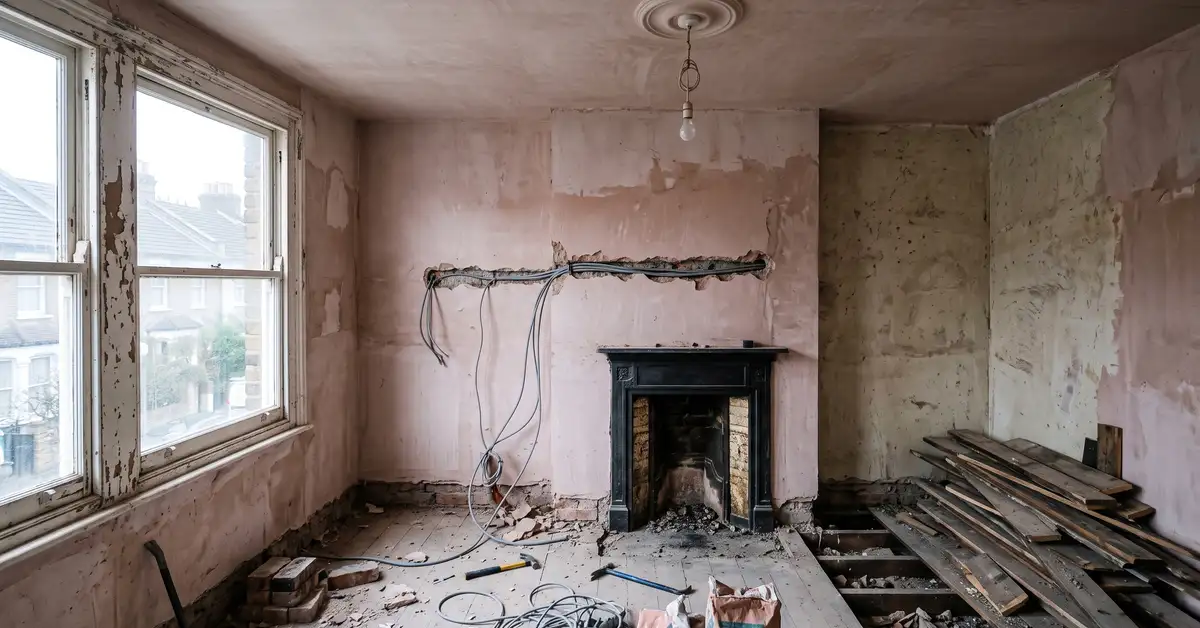
On published UK figures, £40,000 is not enough to renovate a whole three bedroom house, because the bottom of the published range is £43,530 before fees. It is enough to do two or three major elements properly. London and Kent Construction would rather tell you that at the start than halfway through.
The figure to start from is Checkatrade's house renovation guide, on a page dated September 2026, which puts the average renovation cost for a three bedroom UK house at £43,530 to £110,350, with an average of £76,690 and advises adding a 10 to 15 per cent contingency on top. A £40,000 budget sits below the bottom of that range and the honest answer to the question is therefore not a flat no. It is that £40,000 buys a real and useful piece of work and the whole thing depends on whether you choose which piece.
Why the six most common elements already exceed £40,000
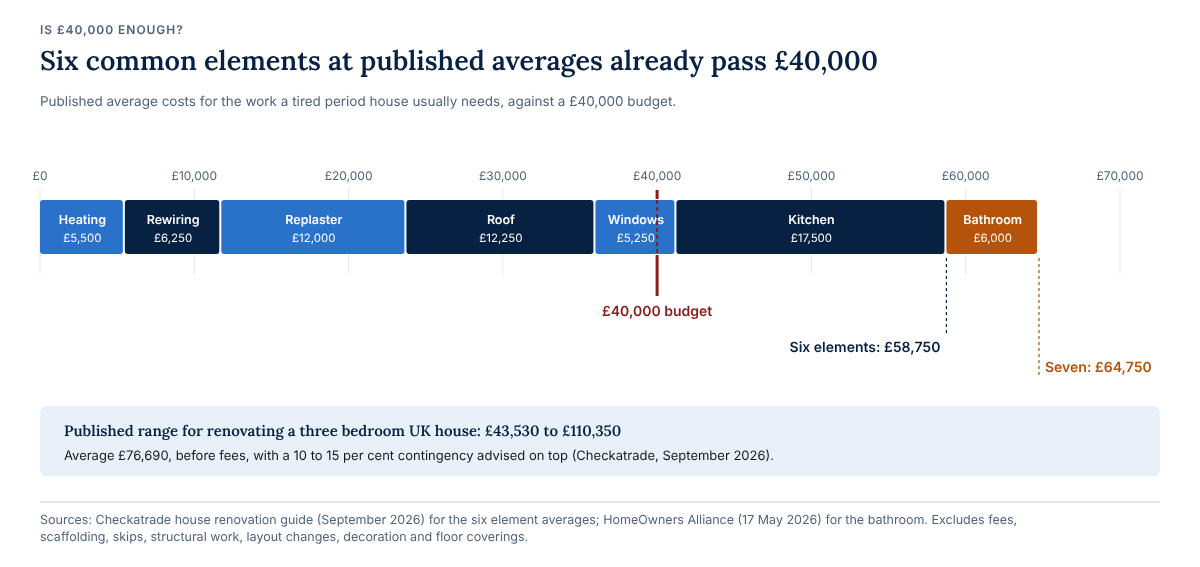
The clearest way to see where £40,000 sits is to add up the published average cost of the work a tired period house usually needs. Every figure below is the average from Checkatrade's September 2026 house renovation guide, except the bathroom, which comes from the HomeOwners Alliance, on a page updated 17 May 2026.
- New heating system: £3,000 to £8,500; average £5,500
- Rewiring: £4,000 to £8,500; average £6,250
- Replaster walls: £10,000 to £15,000; average £12,000
- New roof: £6,500 to £18,000; average £12,250
- Windows: £2,500 to £8,000; average £5,250
- New kitchen: £7,000 to £25,000; average £17,500
- Six elements at their published average: £58,750
- New bathroom (HomeOwners Alliance average): £3,000 to £6,000 managing it yourself; average £6,000
- Seven elements at their published average: average £64,750
That is the arithmetic behind the published whole house range. It explains why the range starts where it does. Note also what the list does not include: professional fees, scaffolding, skips, structural work, any change to the layout, decoration or floor coverings. A £40,000 budget covers roughly two thirds of that list at average prices and which two thirds is the only decision that matters.
Three honest ways to spend £40,000 and what each leaves out
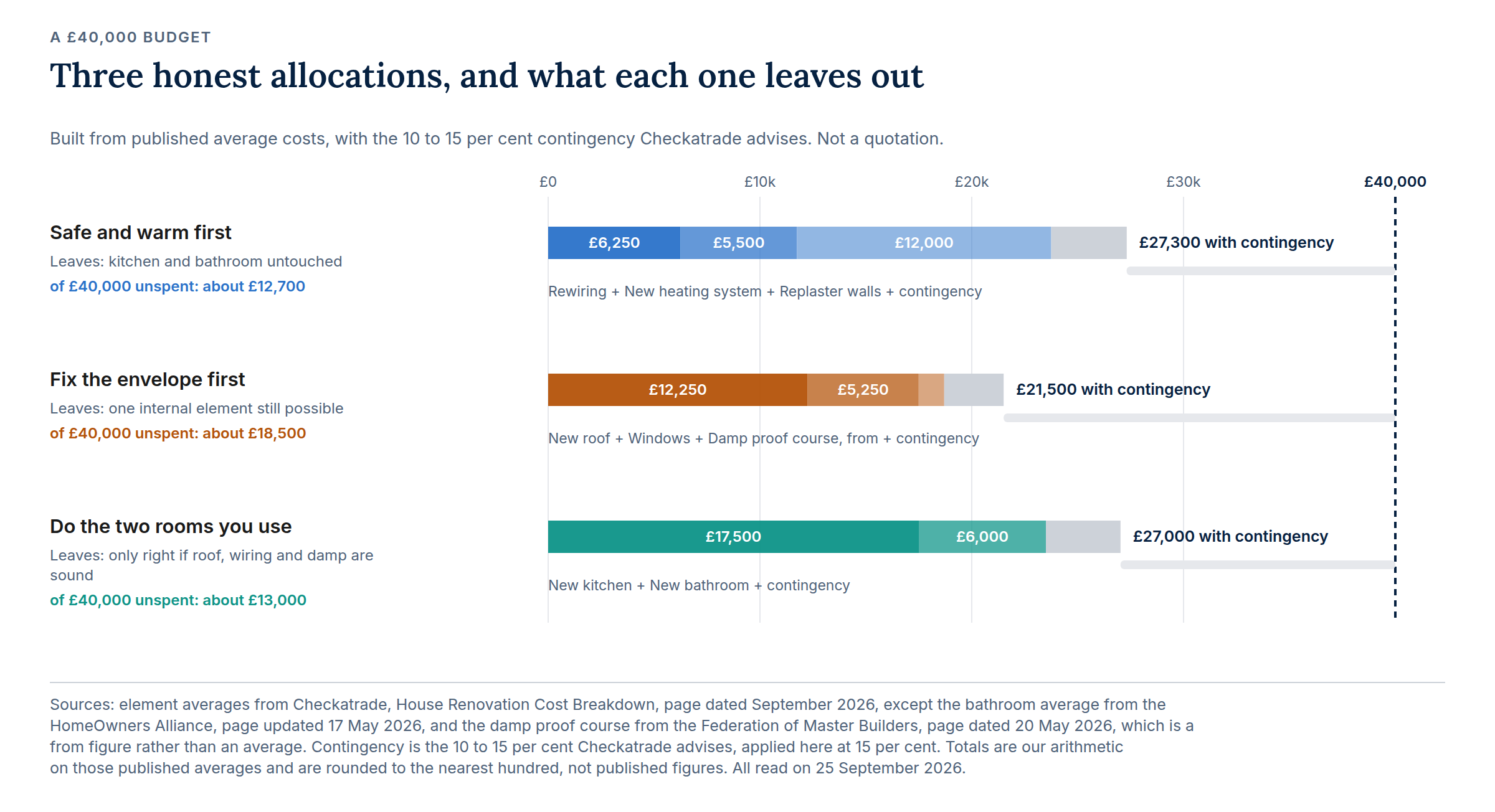
Spending £40,000 well on a period house means picking a purpose and finishing it, rather than starting everywhere. Three allocations, using the published averages above and adding the 10 to 15 per cent contingency Checkatrade advises, show how far it goes.
Make it safe and warm first. Rewiring at £6,250, a new heating system at £5,500 and replastering at £12,000 comes to £23,750 and a 15 per cent contingency takes it to about £27,300. That leaves roughly £12,700 of a £40,000 budget for decoration and floors. It is the allocation we would argue for in a house that has just been bought and is cold, dark and on old wiring. It leaves the kitchen and bathroom as they are.
Fix the envelope first. A new roof at £12,250, windows at £5,250 and a remedial damp proof course at from around £1,200, per the Federation of Master Builders on a page dated 20 May 2026, comes to £18,700, or about £21,500 with a 15 per cent contingency. That is the least satisfying way to spend £40,000 and often the right one, because every pound spent on finishes inside a house that is still letting water in is spent twice. It leaves about £18,500 for one internal element.
Do the two rooms you use. A kitchen at £17,500 and a bathroom at £6,000 comes to £23,500, or about £27,000 with a 15 per cent contingency, leaving roughly £13,000. This is the allocation most people want and it is the right one only when the roof, the wiring and the damp are already sound. If they are not, a new kitchen in a house with failing services is a decision you will reverse.
What gets left out of a £40,000 budget and should not be
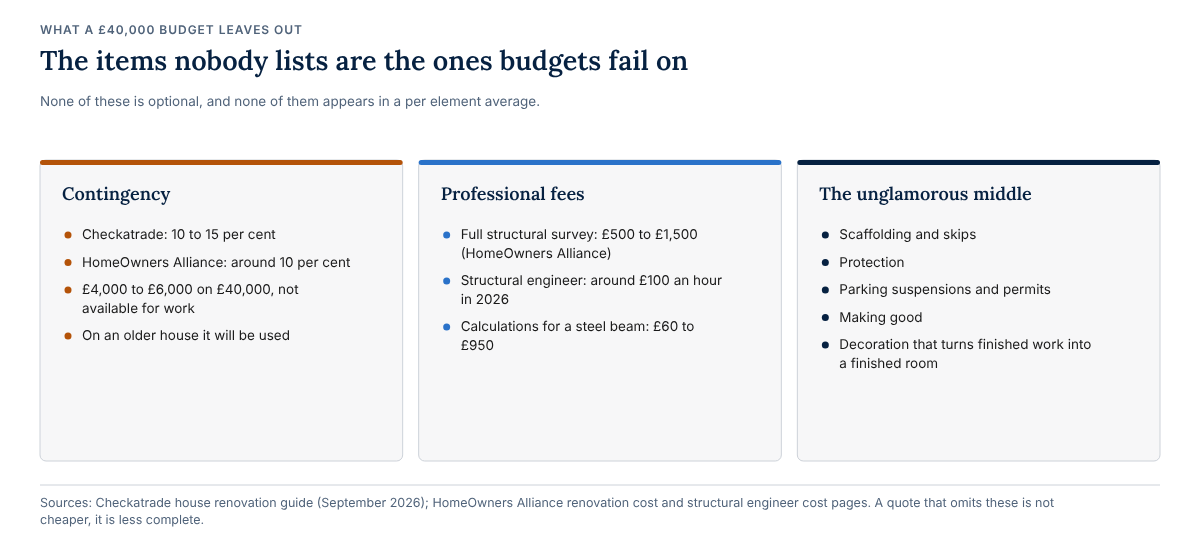
Budgets of this size fail on the items nobody lists. Contingency is the first: Checkatrade advises adding 10 to 15 per cent for unexpected costs and the HomeOwners Alliance advises setting aside around 10 per cent. On £40,000 that is £4,000 to £6,000 which is not available for work. On an older house it will be used. Professional fees are the second. A structural survey before you commit is money well spent and the HomeOwners Alliance puts a full structural survey at £500 to £1,500; where any structure moves, a structural engineer is around £100 an hour in 2026 with calculations for a steel beam at £60 to £950. Then there is the unglamorous middle: scaffolding, skips, protection, parking suspensions and permits, making good and the decoration that turns finished work into a finished room. A quote that omits these is not cheaper, it is less complete, which is the point our guide on how to choose a renovation builder in London makes at greater length.
Why London changes the answer
The published figures above are UK averages and London is not the UK. Labour and materials cost more, access is worse, parking is restricted and the housing stock is older and more often solid walled, which makes damp, plaster and structural work more likely rather than less. Our London renovation cost guide sets out the London figures where publishers give them. Treat any national average as the floor of what the same work costs here, not the middle. That does not make £40,000 a pointless budget in London. It makes the case for spending it on fewer things more strongly.
When £40,000 is the wrong question
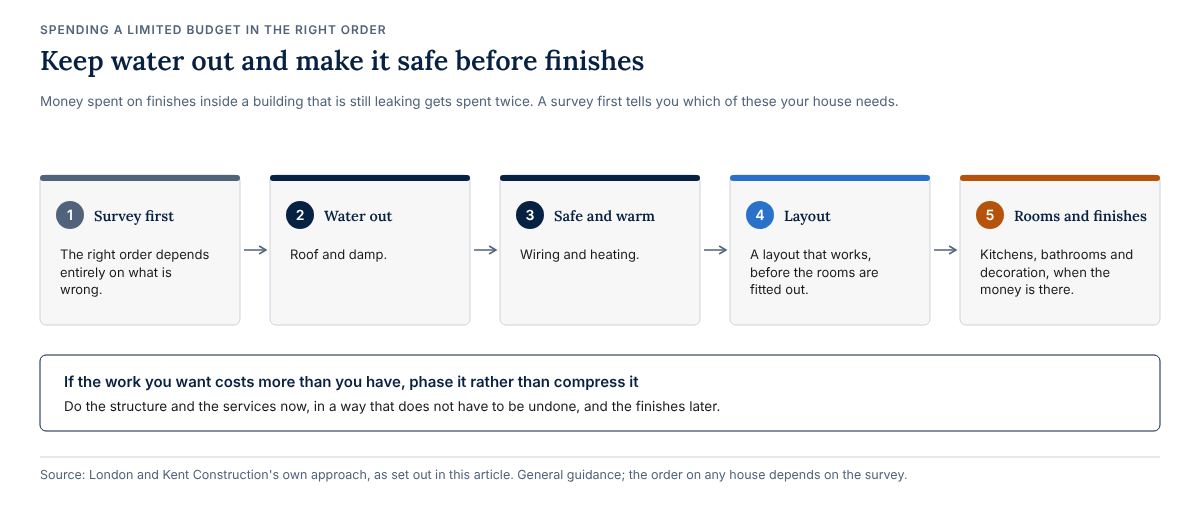
Sometimes the number is not the problem. If a house has a failed roof, rising damp and a structural crack, £40,000 spent on any two of those is the right decision and the third will still be there. If the plan is to extend within a year or two, spending on a kitchen that the extension will remove is money burned. It is better to do the fabric now and the layout later. And if the honest answer is that the work you want costs £90,000, the useful conversation is about phasing it rather than compressing it: do the structure and the services now, in a way that does not have to be undone and do the finishes when the money is there. That is a normal way to renovate a period house and it is a great deal cheaper than doing everything once, badly.
What we would do with a £40,000 budget
We would survey the house before proposing anything, because the right order depends entirely on what is wrong. Then we would tell you what your £40,000 will actually complete, in writing, with the things it will not cover listed rather than implied. We price in sections, so you can see what each element costs and move money between them. Where we think a budget cannot deliver what someone is hoping for, we say so before any work starts rather than discovering it at the point where stopping is expensive. We would rather lose the job than take on a scope we do not believe the money will finish. We do not quote a price for a house we have not seen. We hold CHAS and Constructionline accreditation and are NHBC registered. On a landlord's flat in Pimlico, a refurbishment of around £80,000, we put safety and sound electrics first, then a layout that worked, then chose more affordable kitchen and decoration options that still gave a good finish. That project cost more than £40,000, but the same order of priorities applies to a smaller budget.
Frequently asked questions
Is £40,000 enough to renovate a three bedroom house?
Not a whole one, on published figures. Checkatrade's September 2026 guide puts a three bedroom UK renovation at £43,530 to £110,350 with an average of £76,690, before fees and contingency. £40,000 will complete two or three major elements properly.
What can I get for £40,000?
At published average prices, rewiring, a new heating system and replastering come to about £23,750, or roughly £27,300 with a 15 per cent contingency. Alternatively a kitchen and bathroom at about £23,500, or a roof, windows and damp course at about £18,700.
What should I spend it on first?
Whatever is keeping water out and making the house safe: roof, damp, wiring and heating before kitchens and bathrooms. Money spent on finishes inside a building that is still leaking gets spent twice. A survey first tells you which of those your house needs.
How much contingency should I add to a £40,000 budget?
Checkatrade advises 10 to 15 per cent and the HomeOwners Alliance around 10 per cent, so £4,000 to £6,000 on £40,000. Treat it as spent rather than spare. On a period house with solid walls it very often is.
Is it cheaper to do everything at once?
Usually yes per element, because scaffolding, protection and set up costs are shared. But it is only cheaper if you can fund the whole scope properly. Phasing the work in the right order beats compressing it into a budget that cannot finish it.
What to do next
If you have a figure in mind and want to know honestly what it will complete, the useful next step is a site visit. We will look at the house, tell you what we think needs doing first and set out what your budget will and will not cover, in writing. Call 020 8850 7064, email team@londonandkent.co.uk or book a site visit. Our renovation and refurbishment page sets out how we work.